



VillaSpain Blog
Your Guide to Moraira’s Beautiful Beaches and Hidden Coves
Tue 24th February 2026
Playa Ampolla

Located in the heart of Moraira, Playa de l’Ampolla is the town’s most popular sandy beach — and for good reason. With its fine golden sand and calm, shallow waters, it’s the perfect spot for families, relaxed swimming, and easy beach days by the Mediterranean.
The gentle slope into the sea makes it especially safe for children, while the clear, well-monitored water ensures excellent bathing conditions throughout the season.
Why visitors love Playa de l’Ampolla
• Soft golden sand
• Calm, shallow waters ideal for families
• Lifeguard service during peak season
• Sunbeds and umbrellas available
• Showers and accessible walkways
• Beautiful views across the bay
Its central location means you’re just steps away from Moraira’s cafés, restaurants, shops, and ice-cream parlours — ideal for lunch by the sea or an early evening stroll.
Parking & access
As Moraira’s most popular beach, parking can be limited during peak summer months.
Options include:
• Free public parking next to the beach (fills early in high season)
• Limited paid street parking nearby
• Two main paid public car parks in Moraira and an easy walk to the beach.
During July and August, arriving early is highly recommended. If you’re staying locally, walking or cycling is often the easiest option.
Playa del Portet

Playa del Portet – A Sheltered Mediterranean Gem
Playa del Portet is one of Moraira’s most picturesque beaches, known for its crystal-clear turquoise waters, soft golden sand, and beautiful backdrop of greenery and cliffs. Smaller and more sheltered than many nearby beaches, it offers a peaceful, relaxed atmosphere — perfect for unwinding by the sea.
Calm Waters & Water Sports
The clear, gentle waters make Playa del Portet ideal for swimming and snorkelling. It’s also a popular spot for kayaking and paddleboarding, with rental facilities available from April to September at the far end of the beach — perfect for exploring the bay at your own pace.
Perfect for Families
Thanks to its shallow slope into calm water, Playa del Portet is especially well-suited to families with children. The beach proudly holds Blue Flag status, recognising its high standards of cleanliness, safety, and environmental quality. Professional lifeguards are present during the high season for added peace of mind.
Scenic Walks & Views
For those who enjoy stretching their legs, the nearby coastal path to Cap d’Or Tower offers stunning panoramic views across the Mediterranean — particularly beautiful at sunrise or sunset.
Facilities & Dining
Playa del Portet is well equipped with:
• Toilets, showers and foot washes
• Lifeguard patrols in peak season
• Accessible walkways and facilities
• Kayak and paddleboard rentals
A selection of beach bars and excellent restaurants line the bay, serving Spanish tapas, fresh seafood, and traditional Mediterranean dishes — all with unforgettable sea views.
Easy Access
The beach is easily accessible by road, with parking located close by. It’s a convenient layout and mobility-friendly facilities make it suitable for visitors of all ages.
Cala Portitxolet

A Hidden Cove Between Moraira & El Portet
Tucked away along the coastline, this small stony cala is a true hidden gem, known mainly to locals and seasoned visitors. Quiet, unspoilt, and wonderfully peaceful, it offers a more secluded alternative to the larger beaches nearby.
Access is via a long flight of steps, which makes it less suitable for young children — but for those happy to make the descent, the reward is well worth it.
A Snorkeller’s Paradise
With crystal-clear water and abundant marine life, this cove is perfect for snorkelling. The natural, rocky setting creates excellent underwater visibility and a rich variety of sea life to explore.
There are no facilities here — part of its charm — so visitors should come prepared. A thick towel is recommended for the stony shoreline, along with water shoes for comfort on the rocks.
A Beautiful Coastal Walk
The cala can be reached via a picturesque promenade that connects Moraira with El Portet. The scenic stroll, overlooking the marina and sparkling Mediterranean, makes the visit even more special.
Playa Platgetes

Playa Les Platgetes – The Perfect Balance
Playa Les Platgetes offers the best of both worlds — a blend of soft sand and rocky coves. It’s an ideal choice for families who want the comfort of sandy space for children, while still enjoying excellent snorkelling opportunities along the rocks.
Less crowded than Playa de l’Ampolla, this beach often feels more relaxed, making it a wonderful spot to spend a peaceful day by the sea.
Natural Beauty & Calm Waters
Surrounded by rocky inlets and greenery, Les Platgetes enjoys beautiful Mediterranean views and clear, clean water. The gently sloping shoreline makes swimming safe and enjoyable, particularly for families.
The beach frequently holds Blue Flag status, recognising its high standards of water quality, safety, and environmental care.
Activities & Things to Do
• Snorkelling around the rocky coves
• Paddleboarding and kayaking
• Scenic coastal walks and cycling routes
• Children’s play areas nearby
Whether you prefer exploring the shoreline or simply relaxing on the sand, there’s something here for everyone.
Facilities & Access
Playa Les Platgetes is well equipped, offering:
• Lifeguards in high season
• Toilets, showers, foot washes and changing rooms
• Accessible ramps and pathways
• A nearby car park and steps down to the beach
• A selection of excellent restaurants close by
There’s also a viewing platform where you can pause and enjoy the sweeping coastal scenery.
Playa Andrago

Cala de l’Andragó – A Relaxed Seaside Escape
Cala de l’Andragó is a charming small pebble beach in Moraira, perfect for those seeking a quieter, more authentic coastal experience. Surrounded by dramatic cliffs and open Mediterranean views, it offers a peaceful setting away from the busier main beaches.
Its crystal-clear waters make it ideal for swimming, snorkelling and even diving, with interesting underwater rock formations and vibrant marine life to discover.
Natural Beauty & Atmosphere
This cove is particularly loved for its unspoilt feel and spectacular sunsets — a wonderful spot for photography or simply relaxing by the sea. A short stroll along the nearby promenade leads towards Moraira town centre, making it easy to combine beach time with a leisurely walk.
Perfect for Relaxed Beach Days
• Calm, clear waters
• Excellent snorkelling and marine life
• More secluded and tranquil than larger beaches
• Beautiful sunset views
Although it’s a pebble beach, the gentle waters make it suitable for families, with plenty of space to explore rock pools and enjoy the shoreline.
Dining & Facilities
Cala de l’Andragó has parking directly beside the beach and is easily accessible from the road.
Facilities include:
• Lifeguard service during high season (11am–7pm)
• Nearby restaurants and bars
• Viewing platform for coastal panoramas
The well-known Algas Bar is a local favourite for cocktails with premium sea views, while the nearby restaurant at Playa l’Andragó is renowned for tapas and Spanish specialities.
Cala Llebeig - Cumbre Del Sol Benitachell

Cala Llebeig – A Truly Hidden Gem
Tucked away along the dramatic coastline of the Costa Blanca, Cala Llebeig is a secluded cove offering a peaceful escape surrounded by rugged cliffs and sparkling Mediterranean waters. Far from the busier tourist beaches, it’s a wonderful choice for those seeking tranquillity and natural beauty.
Unspoilt Natural Scenery
With its crystal-clear waters, striking rock formations and untouched surroundings, Cala Llebeig is a paradise for nature lovers and photographers. The setting feels wild and authentic, making every visit feel like a special discovery.
Scenic Coastal Walks
Reaching the cove is part of the adventure. Cala Llebeig is accessed via beautiful hiking trails, including the renowned Ruta de los Acantilados (Route of the Cliffs). These paths offer breathtaking panoramic views across the coastline and the Mediterranean Sea.
The surrounding landscape is also home to native birdlife and local wildlife, making it ideal for gentle exploration and nature watching.
Cala de la Llobella - Benissa Costa

Cala de la Llobella is a tranquil, unspoilt pebble beach in Moraira, ideal for snorkeling and diving, and complete with picturesque natural surroundings. Framed by pine trees and with crystal clear waters, it is the perfect spot for an undisturbed day at the beach.
Scenic Beauty
Cala de la Llobella offers stunning natural scenery. The beach is a hidden beauty, set against a backdrop of rocky cliffs, pine trees, and crystal-clear waters, offering a beautiful natural environment. Plus it's relatively quiet and less frequented than other beaches on the Costa Blanca.
Water Activities
The waters here are typically very clear, making it great for swimming, snorkeling, and simply enjoying the underwater views. You can explore the marine life and enjoy the underwater scenery.
Local Wildlife
The natural environment around Cala de la Llobella supports a variety of local wildlife, including birds and marine life, which can be a delight to observe and photograph for nature enthusiasts.
ACCESS: The beach is accessible by car, with some space available for parking (less than 50 spaces). It is also accessible by foot or bus, with signposted access points.
FACILITIES: There is an anchoring area, but facilities are limited.Posted by Bruce Gibson
Discover Stunning Coves Near La Galesa
Mon 09th February 2026
Whether you’re staying at La Galesa or elsewhere in Jávea, these beautiful beaches and coves are well worth discovering.
Cala El Portitxol (Jávea) is just a 15 min walk from La Galesa.
What makes Cala El Portitxol (Jávea) special
The Costa Blanca is full of beautiful coves, but few compare to Cala El Portitxol. What makes it truly special is the combination of crystal-clear waters, an unspoilt natural setting, and its postcard-perfect scenery — especially the iconic white fishermen’s houses with blue doors lining the bay.
A snorkeller’s paradise
Cala El Portitxol is ideal for snorkelling, with excellent visibility and impressive marine biodiversity. Even experienced snorkellers are often surprised by what they see here, from colourful fish to fascinating underwater rock formations.
Things to do around Cala Portitxol
Whether you’re visiting as a couple, with family, or with friends, there’s plenty to enjoy — from total relaxation to outdoor adventure.
Hiking and viewpoints near Portitxol
Hiking enthusiasts will love the scenic trails nearby, particularly the route to the Mirador del Cap Prim, which offers breathtaking views over the cove and the Portitxol Islet, located just offshore. Visiting at sunrise or sunset is especially recommended.
You can also walk to the Mirador de la Cala Blanca or follow the coastal path to neighbouring coves such as Cala Sardinera.
Recommended activities at Cala Portitxol
Paddleboarding and kayaking: The usually calm waters make this cove ideal for beginners.
Kayaking to Portitxol Islet: For more experienced paddlers and when conditions are right, a kayak trip to the islet allows you to explore small caves and hidden natural spots.
Visiting with children
Cala El Portitxol is suitable for children, although it’s a pebble beach rather than sand. Water shoes are recommended to prevent slipping or cuts. Some areas have shallow water, making it safer and more enjoyable for younger visitors.
Food and drink
If you’re feeling hungry, the well-known Cala Clemence restaurant is perfect for a drink or a meal with stunning sea views. Booking in advance is highly recommended, especially during the high season, as it’s very popular. Toilets are free to use.
Playa La Granadella, Jávea

Playa La Granadella is widely regarded as one of the most beautiful beaches in Jávea and along the Costa Blanca. This secluded Blue Flag cove is around 160 metres long and features a mix of pebble and coarse sand, surrounded by dramatic cliffs and lush Mediterranean scenery.
The beach is famous for its crystal-clear turquoise waters, making it one of the best spots in the area for snorkelling and diving. The seabed is rich in marine life, and visibility is usually excellent. Although slightly harder to reach than other beaches in Jávea, La Granadella is extremely popular with both locals and visitors, especially in summer.
Activities and facilities
La Granadella offers a full range of services during the season, including lifeguards throughout the summer months, restaurants, and water-sports rentals. Popular activities include:
Snorkelling and scuba diving
Kayaking and canoeing
Paddleboarding
Water skiing
For walkers, there is a scenic hiking trail starting near the car park that leads to the remains of Granadella Castle, as well as a nearby viewpoint offering stunning coastal views.
Llop Marí Cave
One of La Granadella’s highlights is the Llop Marí Cave, which can be reached by kayak or by swimming in calm conditions. Inside, you’ll find striking rock formations and rich marine life, with sunlight creating beautiful reflections. Guided kayak tours to the cave are available and are highly recommended.
Getting there and parking
Access to La Granadella is via Carretera de la Granadella, which connects to Carretera Cabo de la Nao. During July and August, vehicle access is restricted to manage capacity, so arriving early is essential.
Parking options include:
Limited official parking near the beach
Roadside parking along the access road (with a walk down)
Free shuttle buses during peak season
Shuttle bus pick-up points (high season)
Trenc d’Alba School car park (Jávea town)
Parking de la Guardia (Cabo de la Nao area)
Avenida Augusta
Buses typically run every 20 minutes from morning until mid-afternoon.
Where to eat
There are several popular dining options right by the beach:
Sur Restaurant – well known for rice dishes and fresh seafood
Rosita’s Beach – tapas and traditional Mediterranean food
Beach bars for drinks and light bites
Alternatively, visitors can bring a picnic and use the nearby rest areas.
Good to know
Very busy in summer — early arrival is strongly advised
Pebble beach: water shoes recommended
Ideal for nature lovers, active travellers, and snorkelling enthusiasts
La GalesaPosted by Bruce Gibson
Air-conditioning installed at villa La Galesa
Mon 27th May 2024
It is with great pleasure that we can announce that air-conditioning has been installed at our villa La Galesa. After feedback from guests, the facility is a generally needed for comfortable stays at the villa, especially during the hot summer months.
Posted by Bruce Gibson
Taking your pet abroad in 2021?
Thu 25th February 2021
Some helpful inforamation about taking your pet abroad in 2021.
Extract from MoneySavingExpert
Taking your pet to the EU or Northern Ireland? What you need to do
The new rules only apply to dogs - including assistance dogs - cats and ferrets. If you want to take another animal abroad, you'll have to comply with the national rules of the EU country you're going to.
You also won't be able to take more than five pets to an EU country or Northern Ireland unless you’re attending or training for a competition, show or sporting event - and you'll need to provide proof of this.
If you want to take five or fewer dogs, cats or ferrets to the EU or Northern Ireland from 1 January 2021, you'll need to complete the following steps the first time you go:
You must have your dog, cat or ferret microchipped, if they're not already
You must vaccinate your dog, cat or ferret against rabies – your pet must be at least 12 weeks old before it can be vaccinated
You'll need to wait 21 days after the primary vaccination before travel
You must visit your vet with your pet to get an animal health certificate, no more than 10 days before travel
In addition, if travelling to Finland, Malta, Northern Ireland, Norway or Republic of Ireland with a dog, you need to ensure it's received treatment for tapeworm one to five days before arrival in these countries. This needs to be detailed on the pet's animal health certificate
The following requirements will allow you to take your pet away for a maximum of four months. If you remain in the EU or Northern Ireland for longer than four months, the Department for Environment, Food and Rural Affairs says you should speak to a vet in the EU or Northern Ireland regarding documentary options for onward travel or returning to Great Britain.
As long as you keep your pets' rabies vaccinations up-to-date, you don't need to get repeat vaccinations for subsequent trips to the EU or Northern Ireland (other than tapeworm treatments for dogs visiting those countries listed above). But you will need to apply for a new animal health certificate for each trip.
Remember to take your animal health certificate with you when you travel, alongside proof of microchipping, rabies vaccinations and tapeworm treatment (where required), as you made need to show these when you enter the EU country or Northern Ireland.Posted by Bruce Gibson
Welcome back to Spain in 2021
Thu 31st December 2020
After a rollercoaster ride of a year, we hope this challenging period is behind us.
From Spain being in lockdown in March to flight corridors reopening in June, only for them to close again a few weeks later. Despite this, together we have overcome so much. Some of you were able to travel to Spain safely this year, but unfortunately, some of you had to postpone your much anticipated holidays until 2021.
Now, we are looking forward to the new year and we are enthusiastic and hopeful that good times are just around the corner. With the good news of the vaccines on their way, as soon as it is deemed safe to travel again, we can't wait to welcome you back to Spain once more.
2021 is being named “the year of travel” with many people wanting to make up for lost time and cancelled holidays. The summer season is set to be the longest one ever and is the perfect time to get your family or friends together and start making new precious memories with a trip to Spain, and private holiday rentals are being deemed as the preferred option. Renting private accommodation means you can have a “vacation pod” and spend time together, limiting your exposure to other people.
After spending weeks, sometimes months, indoors due to lockdowns and regulations, nature’s calling is being felt by everyone. Spend time with your friends and family outdoors, exploring stunning Spanish coasts and landscapes and breath in the fresh air in big open spaces.
With safety and flexibility at the forefront of everyone's minds, travel in 2021 will be different from what we all knew previously. We understand the need for assurance that if your holiday plans change, you are covered. That's why you can talk to us about your concerns and we will find a solution.
The future's looking bright and we are positive that 2021 will be a fantastic year to fulfil your dreams of wanderlust. We hope to see you soon again in Spain and until then, we wish you a happy new year.Posted by Bruce Gibson
Hello from Spain
Mon 23rd March 2020
 What's happening in Moraira and the surrounding areas here on the Costa Blanca during the Coronavirus (Covid-19) outbreak you may ask, apart from restaurants, bars and coffee shop closures?
Whilst we are staying in Mirador al Sur on the Moraira Benitachell hillside overlooking the valley and Moraira, we are somewhat removed from the town itself so feels like you are in the country. Without seeing hardly anyone walking about each day feels like a Sunday but even quieter.
The Spanish regulations put in place for this lockdown from midnight on the 14th March include the limitation of movement. To that end only one person is permitted to take a car to the supermarket and one can only go for a walk if you have a dog and on your own. Sometimes you will see a police patrol car parked in the supermarket car park and a patrolman checking that only one person is driving. Although there are severe fines to support the lockdown in Spain and with France too, it appears they are giving verbal warnings, or at least in the initial stages and if it is for a minor infringement.
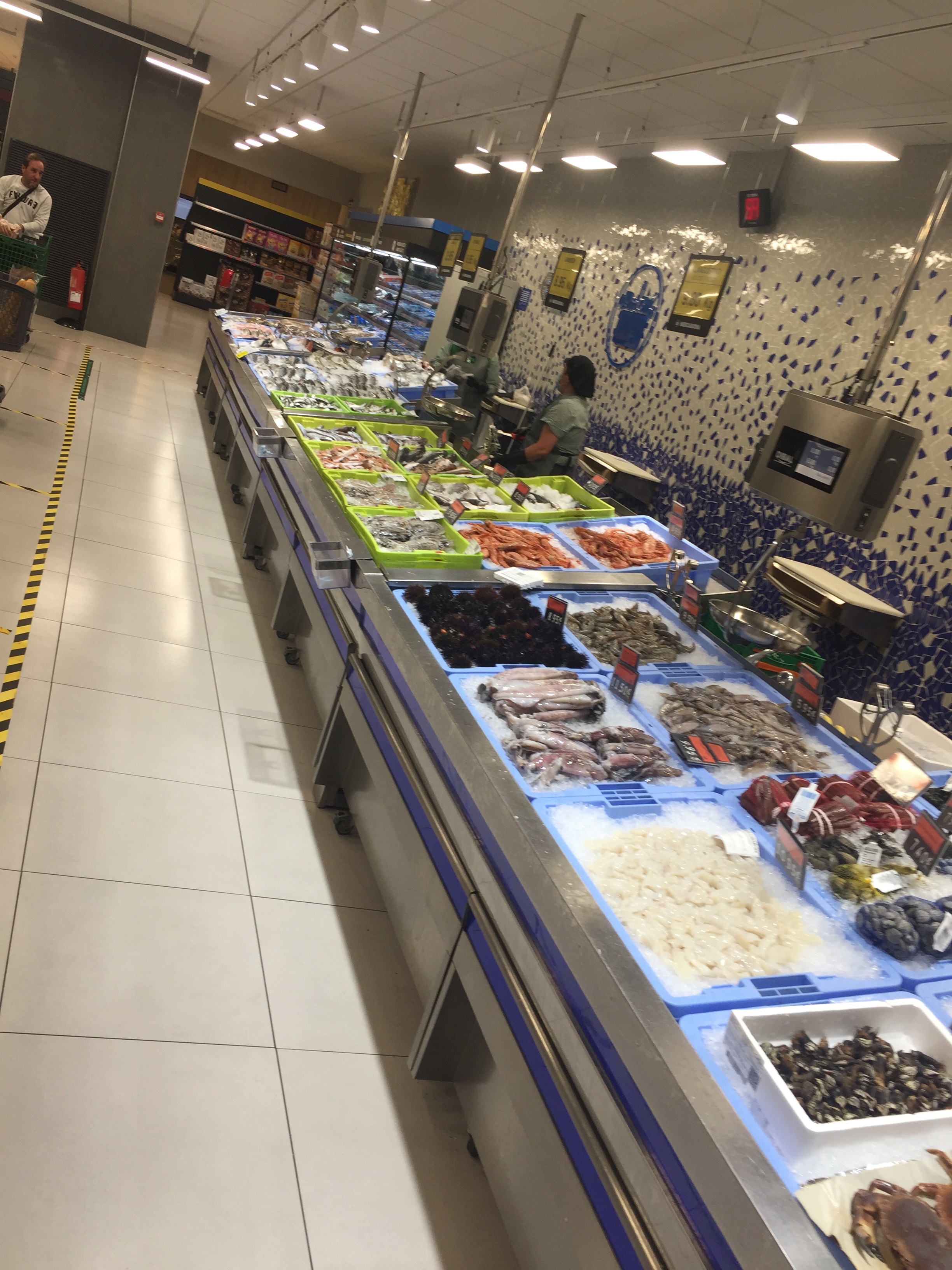
I have found the supermarkets are full of produce and there are no queues at all. In fact, the isles of even the big 10,000 sq ft supermarkets may at any time only have 3 or 4 people in. On Saturday 21st March the large Carrefour supermarket had maybe more staff than customers in at 10.30am; considering it was fully stocked was quite odd. At the entrance a security guard ensures you put on a pair of disposable gloves and advises you to keep a distance from other shoppers. Gel is also provided.
There was a rush, but hardly any panic one would say, before the shutdown, simply as it coincided with a regional holiday on the Costa Blanca, so more products were being purchased than usual.
Pushing the trolley around the supermarkets is quite strange as everyone gives a wide birth to other trolley pushers. There is no interaction between anyone and clearly none as no partners or family are present. One is just there to shop.
Chemists, takeaways, launderettes and oddly hairdressers are open. I understand the latter two is due to the government making the concessions in a bid to ‘not do much harm’ to small businesses which are important ‘for the economic structure of the country.’ Ministers also wanted to maintain some elements of daily life to reduce the harm to the economy and the upset to people’s routines.
Most electrical stores that sell IT products are permitted to open, so you can even shop for a TV or fridge and not have to buy an IT product. Other retailers are all closed, as well as builders merchants, unless with the express permission of the police and have a certificate to open. Trade builders merchants are mostly closed too. Oddly one builders merchant in Benissa has been open. It may well depend on staff considerations as to why some are open but others are mostly closed. Clearly a problem for the self-employed generally, if they are unable to get any supplies to carry on working.
Only those people who can obtain certificates to travel to work are able to get on with their business.
Most, if not all professions like solicitors are taking the opportunity to work from home, or just spend time with family.
The common site of group semi and professional cyclists have had to cease their sport. With gym closures and inability to walk about then nobody is getting much exercise. For those staying in villas with gardens then one can at least enjoy the sunshine outside and maybe do some exercise.
The new games room at Mirador al Sur has a static exercise bike and ping pong table, which is getting well used.
Local supermarkets;
Mercadona is a huge national chain of supermarkets here in Spain and whilst the outlet in Moraira has a great wet fish counter and has staff who hand slice the wonderful selection of cured hams, currently closed off though, lacks choice in mostly all other areas. There is a good sized fresh fruit and vegetable section but lacks choice. There is no open butchery and all meat products are pre packed. The range of wines is extensive at the very cheap end and too many of the same price point and style.
Aldi is opposite Mercadona and a busy store. Good choice of products and non-food that ever changes.
Carrefour has its dominant presence but they do no not have an open butchery section either, There is a greater choice of fruit and veg and cheese too. Probably a better selection of wines and international products on offer. The non-food section is quite useful too.
Lidl is just a few doors away from Carrefour and a much busier store.
Pepe La Sal has 2 branches in Moraira and located on the main road into Moraira and on the coastal road to Calpe. Both stores have wet fish and an open butchery . The meat in particular is very good and great choice cut to order. The stores have a far greater selection of international products and vast range of wines including wonderful regional Spanish wines from Alicante and Valencia areas. In fact, there is more choice on wine than all the other supermarkets put together. If you want a 1lb of plain flour or say porcini (dried cepes) you will get it here. Pastries everywhere always disappoint. They look good but don’t taste as nice as they look.
All supermarkets close on Sunday, with the exception of a small Corte Inglais in Moraira town opposite the fuel station. You can buy freshly baked bread there too.Posted by Bruce Gibson